November 16, 2026
Precision manufacturing relies heavily on modern machining technology, yet the performance of computer numerical control equipment is inextricably tied to raw material integrity. When manufacturers purchase from an inconsistent steel supply, downstream operations face significant dimensional deviations, edge defects, and structural failures. Maintaining strict quality standards from raw stock through final processing ensures that critical components meet design tolerances consistently.
Understanding the Role of Material Consistency
Modern fabrication facilities depend on raw stock that behaves predictably during cutting, milling, and turning operations. When raw stock varies in its chemical or mechanical composition, tooling paths and cut rates programmed into CNC machinery encounter unexpected physical resistance. Sourcing from a dependable steel supply eliminates variability across production lots, allowing automated equipment to deliver repeatable geometries.
Every grade of steel possesses specific ratios of carbon, manganese, silicon, and micro-alloying elements designed to yield targeted mechanical properties. In low-grade raw stock, these elements often disperse unevenly, creating localized hard spots or soft pockets within the workpiece. As a cutting tool passes through these erratic compositions, it experiences fluctuating tool pressures that push the cutter off its intended trajectory. Even a deviation of a few thousandths of an inch can cause a part to fail inspection.
Evaluating Chemical Inhomogeneity and Internal Stresses
Cutting accuracy depends on more than just the surface condition of a plate, bar, or tube. During the initial casting and rolling stages, internal stresses and microstructural impurities can become locked inside the material.
- Residual Stresses: As mills cool and straighten rolled stock, severe tensile and compressive stress gradients form within the core. When waterjet cutting, CNC milling, or saw cutting relieves these internal forces, the material warps or bows unexpectedly.
- Non-Metallic Inclusions: Trapped silicates, oxides, and sulfides disrupt the crystalline matrix. These microscopic impurities act as abrasive barriers that deflect cutting edges and create micro-cracks along cut paths.
- Segregation of Carbon: High concentrations of carbon in localized bands form hard martensitic or bainitic structures, causing severe chatter during turning or milling passes.
When a machine shop receives stock with low internal integrity, parts that measure true while clamped in a fixture often distort immediately upon unclamping. Sourcing verified raw stock through an established steel supply minimizes these internal anomalies, ensuring that flat stock stays flat and round stock holds its true profile.
Addressing Surface Imperfections and Scale
Surface contamination is another major obstacle to achieving clean cuts and sharp edge definitions. Hot-rolled steel forms a thick layer of iron oxide mill scale as it cools from elevated temperatures. This layer is hard, brittle, and bonded inconsistently to the base metal.
When laser cutting or plasma cutting through heavy mill scale, the assist gas fails to eject molten slag cleanly, which creates dross and ragged lower edges. In mechanical cutting operations, mill scale strips cutting edges rapidly, leading to torn burrs rather than clean shears. Machinists must run additional passes simply to remove outer scale, extending cycle times and increasing wear on tool holders and cutters.
Cold-drawn and pre-machined stock reduces these surface issues by offering uniform outer layers. When facilities utilize pickling, shot blasting, or surface grinding prior to precision cutting, the tooling engages sound material immediately. This ensures consistent cut widths, square edges, and smooth finishes that require minimal secondary deburring.
Examining the Impact on Thermal Cutting Operations
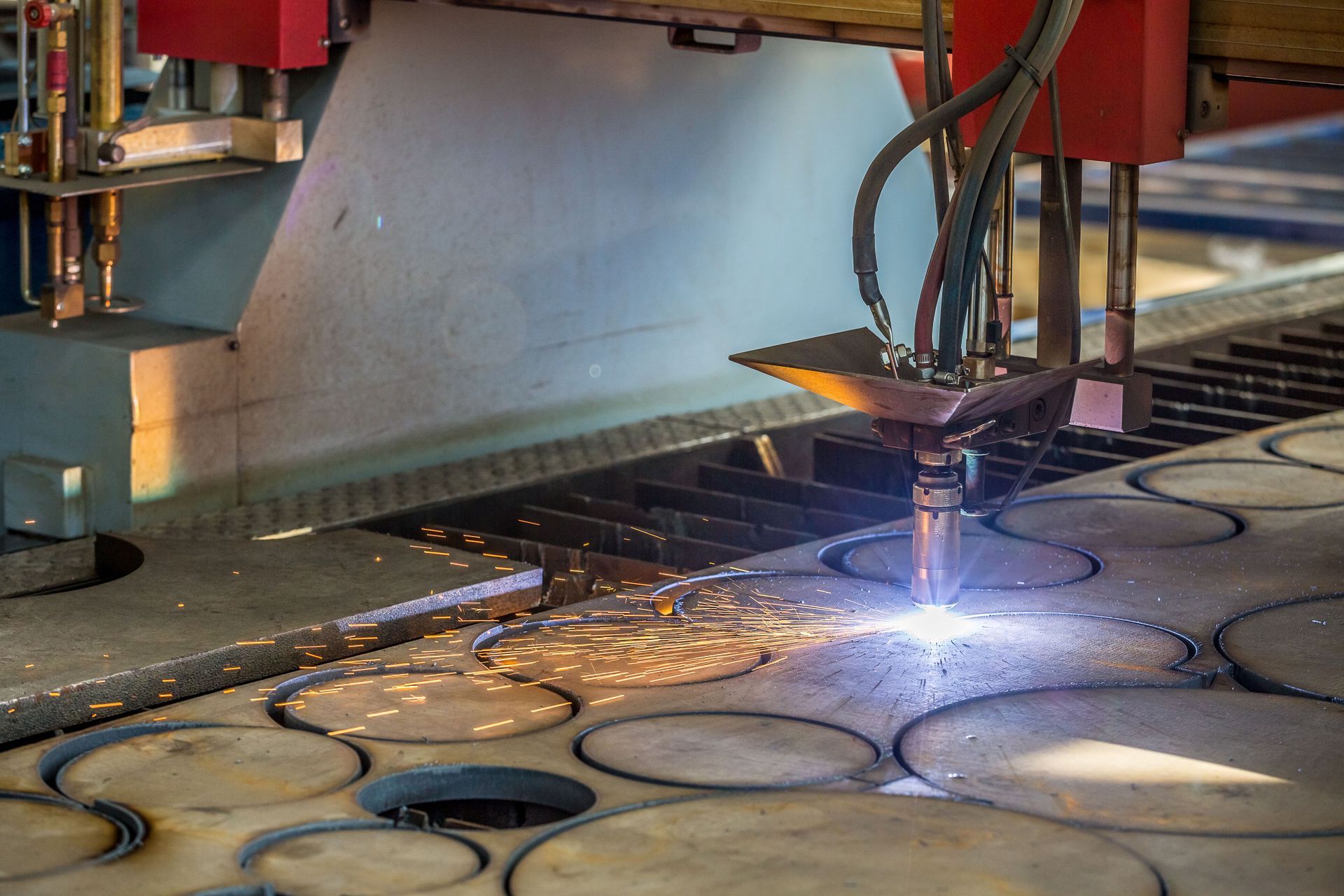
High-energy thermal cutting processes, including fiber laser and precision plasma cutting, respond immediately to variations in steel chemistry. Laser cutting relies on an exothermic reaction between the metal and oxygen assist gas, or the precise vaporization of metal using high-pressure nitrogen. If the underlying alloy composition fluctuates, the thermal dynamics change drastically across the sheet.
A dependable steel supply ensures consistent silicon and carbon levels, which dictate how clean the kerf remains during thermal cutting. If silicon levels exceed standard thresholds, the molten puddle becomes fluid and erratic, leading to excessive spatter and gouged cut faces. In contrast, balanced metallurgy allows the cutting beam to maintain a narrow, uniform kerf, yielding square corners and smooth taper-free sidewalls.
Thermal input can also induce severe distortion in poorly tempered plates. Plates with unbalanced internal stress distributions twist under the focused heat of a plasma torch or laser head. To prevent part lifting and cutting-head collisions, production facilities rely on stress-relieved, laser-grade steel stock that dissipates heat evenly across the cutting bed.
Analyzing the Mechanics of Milling and Turning
Precision chip formation requires predictable shear zones within the metal. In mechanical processes like CNC milling, CNC turning, and precision drilling, material quality dictates surface roughness, burr formation, and thread engagement.
When cutting high-grade carbon and alloy steels, cutting chips break into short, manageable curls that evacuate readily from the cut zone. Inferior stock, however, produces stringy, continuous chips that wrap around rotating spindles and gouge finished surfaces. In extreme cases, erratic chip formation leads to built-up edge, where softened metal welds itself to the cutting tool tip, destroying dimensional accuracy.
Machinability factors directly govern the primary machining risk and resulting part defect during processing:
- High Internal Stress: Introduces post-machining warp, resulting in out-of-flatness and ovality.
- Hard Spot Segregations: Causes rapid tool chipping, which leads to tapered bores and dimensional drift.
- Heavy Mill Scale: Creates assist gas disruption, producing rough cut edges and heavy dross.
- Uncontrolled Inclusions: Generates tool chatter and micro-fractures, leaving poor Ra surface finishes and micro-cracks.
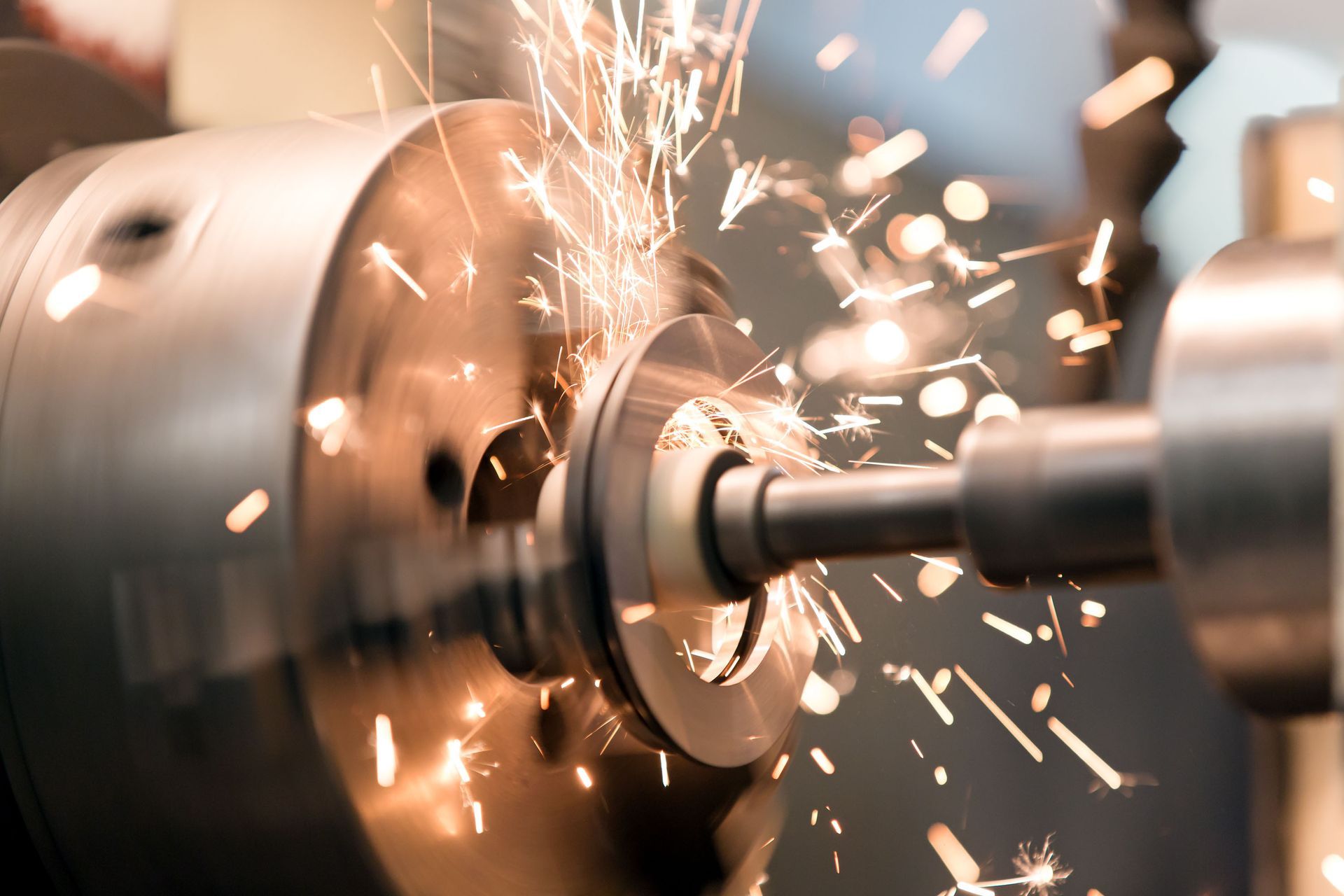
High-precision components frequently demand tight concentricity and true cylindrical runout. In turning operations, any structural soft spot allows the workpiece to deflect away from the tool bit, causing taper along the turned diameter. By pairing rigid machine setups with certified raw materials, machine shops achieve uniform cutting forces and mirror-like finishes across entire production volumes.
Reviewing Global Supply Pressures and Procurement Challenges
Global economic pressures and shifting regulatory frameworks directly influence material availability and quality oversight. Trade policies, tariff adjustments, and international shipping constraints often force purchasers to evaluate alternative stock options.
According to Fastmarkets, the US Department of Commerce expanded the list of goods subject to 50% tariffs, adding 407 product categories of steel and aluminium derivative products.
These trade restrictions alter the movement of intermediate materials across global markets, creating supply constraints that encourage some suppliers to market lesser-grade materials. When manufacturers encounter fewer reliable domestic options, the risk of purchasing non-compliant metal increases.
Maintaining strict incoming quality control protocols protects production workflows from substandard stock. Rigorous machine shops demand Certified Mill Test Reports that document exact heat numbers, chemical compositions, and tensile testing results for every delivery. By validating these documents against physical deliveries, manufacturers ensure that their steel supply meets both customer specifications and domestic manufacturing standards.
Ensuring Dimensional Precision in Finished Components
The ultimate value of a component lies in its ability to assemble cleanly and perform under demanding operational environments. Whether fabricating hydraulic manifolds, gear shafts, or structural brackets, material deficiencies compromise overall assembly performance.
- Tight Bore Tolerances: Bearing journals and press-fit sleeves require roundness within fractions of a thousandth of an inch. Unsound raw stock results in out-of-round bores that cause bearing race failure.
- Thread Integrity: Tapping operations into steel with hard inclusions break taps inside blind holes, often resulting in scraped components. Uniform raw stock ensures clean, intact thread flanks that resist stripping under rated torque.
- Weldability and Assembly: Excess trace contaminants like sulfur or phosphorus cause hot cracking during subsequent welding passes. Clean base metals allow strong, porosity-free weld joints.
Fewer secondary operations are required when raw materials behave consistently throughout primary cutting passes. Facilities eliminate the labor-intensive hand grinding, secondary skim cuts, and thermal straightening steps that drive up production costs.
Material selection and procurement are fundamental engineering decisions that dictate the overall success of any machining project. Substandard metal compromises equipment efficiency, accelerates cutting tool wear, and introduces severe part distortion that disrupts production schedules. In contrast, partnering with a proven steel supply secures verified chemical compositions, uniform mechanical properties, and predictable cutting behavior. Maintaining strict raw material standards ensures that every cutting pass yields accurate dimensions, exceptional surface finishes, and dependable performance. For complex manufacturing projects that demand strict tolerances and dependable machining performance, partner with Summit Machine Co, Inc.